Understanding Bovine Mastitis: Why Antibiotics Fail & How Natural Bio-Polymers Protect the Teat
Mastitis costs Indian dairy farmers over ₹7,000 crores annually. Discover how non-antibiotic polymer barrier technology stops environmental pathogens without milk withholding penalties.
The hidden cost of mastitis
Mastitis is the single most expensive disease on Indian dairy farms. Beyond treatment costs, farmers lose income through reduced yield, discarded milk during antibiotic withholding periods and, in severe cases, permanent damage to the udder.
Most infections are environmental. After milking, the teat canal stays open for up to an hour — long enough for Staphylococcus aureus, E. coli and Streptococcus from bedding, dung and water to enter.
Why antibiotics alone are not the answer
Antibiotics treat an infection after it has started. Repeated use leads to resistant bacteria, residues in milk and a withholding period during which milk cannot be sold.
Prevention at the teat end — every single milking — is far cheaper than treatment, and it keeps milk free from residues.
How a bio-polymer barrier works
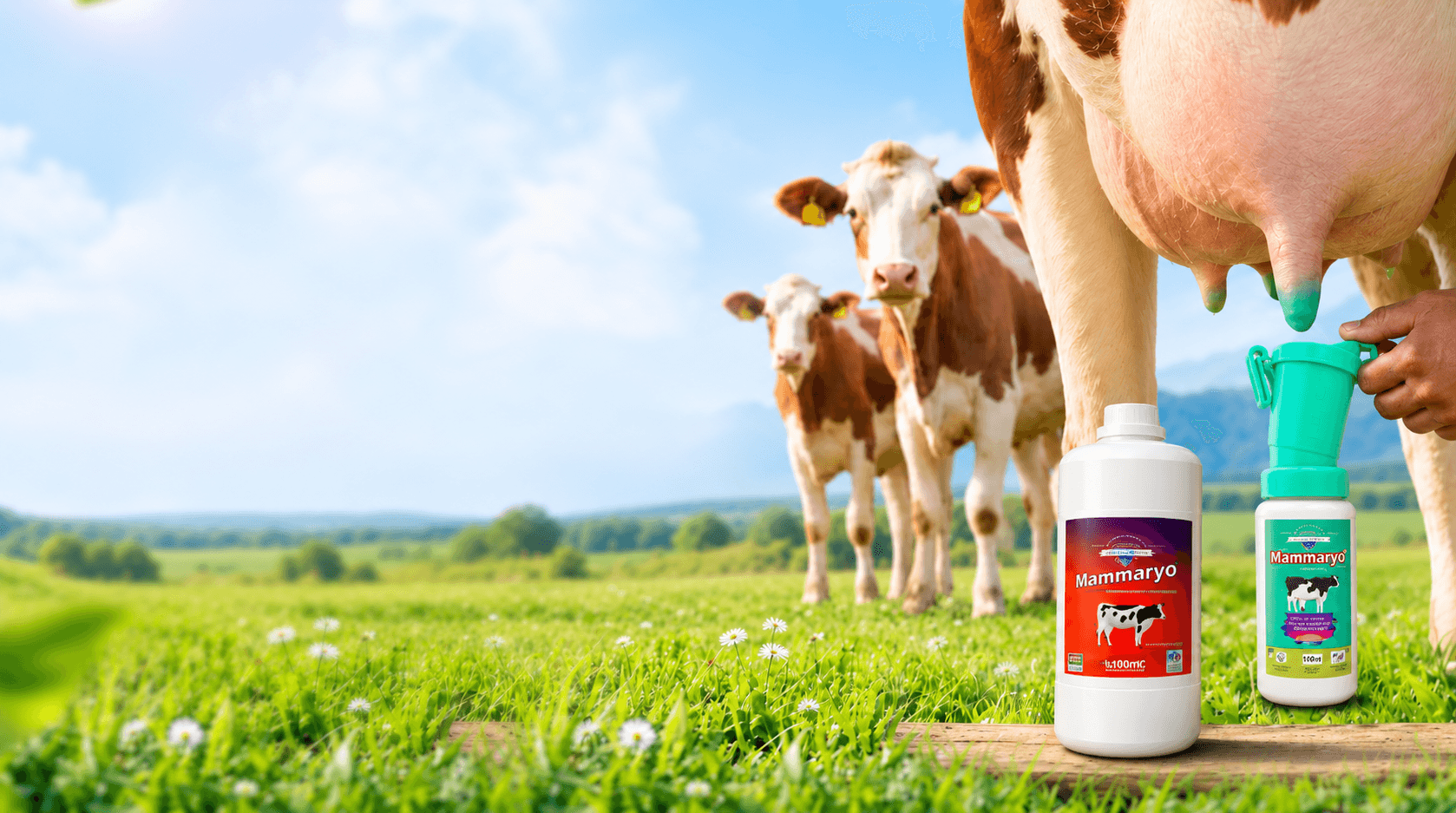
MammaryO, built on our patented NaxPoly® technology, forms a flexible film over the teat right after milking. The film physically blocks pathogens while the teat canal closes, and conditions cracked teat skin.
Because it is non-antibiotic and was tested with TANUVAS-TRPVB, there is no milk withholding period. The film washes off easily before the next milking.
Putting it into your routine
Dip every teat fully with a teat dip cup immediately after milking and let it dry. Combine this with clean bedding, dry standing areas and regular CMT screening for best results.